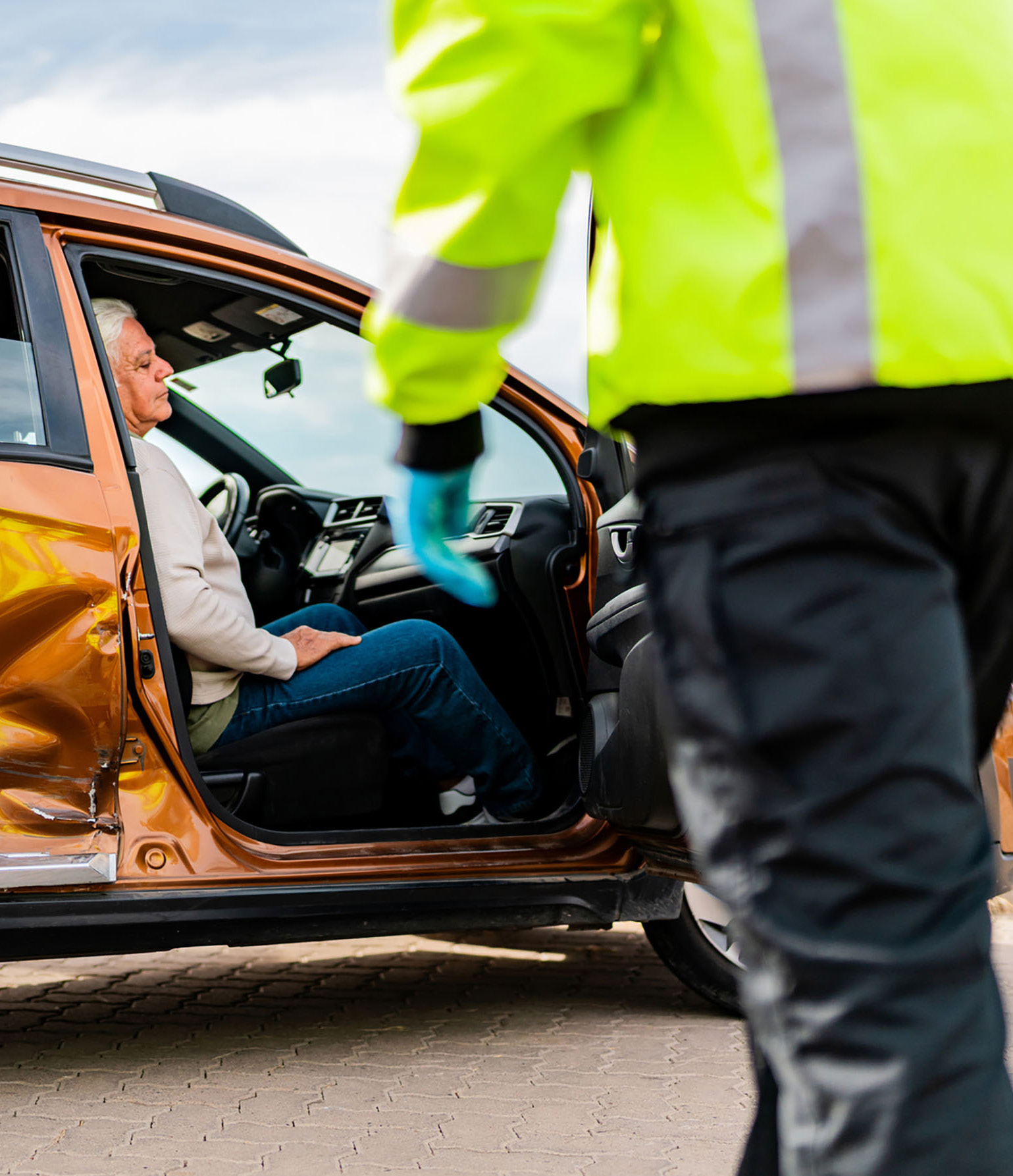




Latest Department for Transport (DfT) figures show that an average of four people are killed every day on Britain’s roads, with more than 70 seriously injured.
In 2024, this equated to 1,602 fatalities, with an estimated one-in-three of these involving someone driving or riding for work.
To tackle this, the Government announced its first road safety strategy for more than a decade earlier this year, with the aim of reducing the number of people killed or seriously injured by 65% by 2035.
It encompasses a wide range of measures, including mandating the fitting of the latest safety technology to new vehicles, as well as reducing drink-drive limits and mandatory eye tests for motorists aged 70 and over.
Many of the proposals will have a direct impact on how organisations operate their vehicles, with fleet decision-makers being encouraged to help shape the strategy through a consultation which runs until Monday, May 11.
The full road safety strategy and information on how fleet decision-makers can have their say can be found by visiting www.gov.uk/government/publications/ road-safety-strategy
Here, we look at five key areas which will impact fleets.
1) STRONGER ENFORCEMENT
“In terms of on-road behaviour, the two areas in the strategy which are probably most likely to affect company car and van drivers are stricter drink-drive limits and tougher fines and penalties for the most dangerous road users,” says Paul Hollick, chair of the Association of Fleet Professionals (AFP).
The Government is consulting on lowering the drink-drive limit in England and Wales, including an even lower limit for novice drivers.
Currently, Scotland’s limits are almost half those of England, Wales and Northern Ireland, although Northern Ireland is planning to lower its limits to Scotland’s levels in the near future.
The DfT says estimates suggest that lowering the drink-drive limit in England and Wales could reduce fatalities by between 25 and 100 annually.
However, Scottish Government data indicates that it has not seen a significant reduction in casualties since lowering its limits back in 2014.
Drug-driving is also becoming an increasingly serious issue. Latest DfT figures show an increase in drug-related collisions over the past 10 years; between 2014 and 2023, there has been a 70% increase in driver fatalities where drugs were present.
To combat this, the strategy calls for exploring alternative methods for drugdriving evidence collection and processing, such as testing oral fluid, saliva or sweat.
The DfT says this is because there has been a “notable increase” in the number of forensic blood samples that are needed to investigate drug-driving offences, which has created significant challenges both in terms of cost and forensic capacity.
The strategy also proposes a review of the penalties and mandatory training for drinkand drug-driving offences, including consulting on the use of alcohol interlock devices.
The Government is considering bringing in new powers to suspend the driving licence of those suspected of committing a drink- and/ or drug-driving offence until attendance at court or a guilty plea, or if bailed pending forensic analysis being undertaken; as well as those under investigation for the most serious motoring offences resulting in a fatality or serious injury, However, fleet decision-makers at a recent Fleet200 Strategy Network raised concerns, with one stating: “Some court cases could be months, or even a year away – what do we do with our company drivers until that point?”
The consultation will also gather feedback on introducing penalty points for failure to wear a seat belt, taking tougher action on those who fail to stop and report collisions, those who choose to drive unlicensed or without insurance, and those with no MOT.
The Government intends to continue to work closely with the National Police Chiefs’ Council to highlight the importance of regular police roadside eyesight tests for all drivers, ensuring that those drivers who fail to meet the minimum eyesight standards required for driving will have their driving licence revoked by the Driver and Vehicle Licensing Agency.
2) NATIONAL WORK-RELATED ROAD SAFETY CHARTER
The Government is proposing to pilot a National Work-Related Road Safety Charter for businesses that require people to drive and ride, including heavy goods vehicles (HGVs), large goods vehicles (LGVs), vans, cars, motorcycles, electric bikes and pedal cycles.
The charter, which aims to improve safety for all road users by reducing work-related road risk, will be developed in collaboration with business and industry.
It will be informed by schemes such as National Highways’ Driving for Better Business (DfBB) programme, Transport for London’s meal and grocery motorcycle road safety charter, the Driver and Vehicle Standards Agency (DVSA) Earned Recognition scheme and the Tyresafe programme.
It will promote good practice and accountability of organisations and their workers and its core principles will include clear organisational accountability, evidence-driven road risk policies, demonstrable compliance and governance and continuous monitoring and review.
“What happens with the charter could be huge,” says Saul Jeavons, a director of The Transafe Network.
“I liken it to the charter they have in the oil and gas industry. In that, the International Association of Oil and Gas Producers has a recommended practice which basically sets a baseline for things such as vehicle specifications.
“It’s all the kind of things that good operators are already doing. It’s all the kind of things which actually, if you’re really serious about complying with the health and safety responsibilities you’ll probably already be doing, but it’s going to be interesting to see what level they pitch that at.”
While the actual content of the charter has not been published, the concept has been warmly received across the fleet sector.
“The proposal for a National Work-Related Road Safety Charter to establish a national standard for any organisation that requires its employees to ride and drive for work could be an important strategic move and hopefully helpful in supporting fleet managers to get the resources they need to implement safety measures,” says Paul Hollick, chair of the AFP.
“Certainly the idea has merit and actions designed to reduce work-related road risk are always welcome.”
It is anticipated large organisations will incorporate the National Work-Related Charter into their procurement requirements, setting higher safety expectations across supply chains.
For many employers, compliance will become not just a regulatory consideration, but a commercial necessity.
“I think we will quickly see large companies demanding this from their supply chains,” says Simon Turner, engagement manager at DfBB. “The public sector is also going to have to lead in this respect with its own supply chains.”
Success will initially be measured on organisational engagement, initial safety impacts and culture change. The pilot will run for two years and will be monitored and fully evaluated.
“Fleets should be aware that the pilot initially will be voluntary, but ministers may regulate the sector if organisations do not sufficiently engage,” says Nicholas Lyes, policy and standards director for IAM Roadsmart.
“Those responsible for health and safety should look to engage with officials – not just highlighting best practice, but also challenges.”
Although it has not yet been launched, the consultation on the charter is already having an impact, including encouraging a cultural shift towards shared responsibility across organisations, says Mark Cartwright, head of commercial vehicle incident prevention at National Highways.
“We’re aware that it’s already starting to increase awareness across industry of their obligations and the risk that is attached to at-work driving,” he adds.
“It starts the conversation. It also supports individuals in organisations who are already involved in the fleet safety fight and taking it to board level.”
3) EXPANSION OF DVSA EARNED RECOGNITION
The Government will explore expanding DVSA’s Earned Recognition scheme, which was launched in 2018. This is a voluntary scheme and is a way for businesses to prove they meet driver and vehicle standards, continuously assess their own compliance, use monitoring systems and are compliant with vehicle and road safety standards.
The DVSA says gaining earned recognition status allows companies to prove they are exemplary operators when they bid for contracts, are less likely to have their vehicles stopped at the roadside for inspections (although some fleets dispute this) and are less likely to have DVSA enforcement staff visit their premises.
Earned recognition operators are proven to operate well-maintained and compliant vehicles. Data from FleetCheck last year, covering more than 72,000 HGV and trailer records from 2023 onwards, showed the MOT failure rate to be 1.56% for Earned Recognition fleets compared with 4.54% for others.
“Set alongside other operators, their performance is impressive,” says the Road Safety Strategy. “Not only is there a marked difference in the failure rate, but in the pass rate too. Earned Recognition fleets are hitting a 95.74% pass rate, against 91.97% for their non-ER counterparts. An MOT provides a snapshot in time, whereas ER delivers a continuous picture of performance.”
There are currently 137 operators in the scheme, and 40 have been removed since it started.
DVSA removes operators from time to time, for example, when they stop trading as an operator, change company status, no longer meet the criteria for the scheme, or choose to leave.
Companies on the list include Automobile Association Developments, Cemex UK, Culina Logistics, Clean Linen, DPD, Fowler Welch, Gist, Sainsbury’s, Tesco Distribution and Wincanton.
4) MANDATED VEHICLE TECHNOLOGY
The road safety strategy also proposes mandating the fitment of 18 new vehicle safety technologies under the Great Britain Type Approval scheme.
The move would bring Britain in line with the EU, where they have been mandatory since 2024 under the General Safety Regulation 2 (GSR2) and, as such, many are already fitted as standard on new cars registered in the UK.
“Innovation is leading to new technologies in existing modes of transport which have enormous potential to improve safety for all road users if harnessed correctly,” says the strategy.
“For example, advanced driver assistance systems (ADAS) include features such as advanced emergency braking, lane-keeping assistance and adaptive cruise control, all designed to reduce human error and prevent collisions.
“Embracing advancements can create a safer, more sustainable transport system that benefits everyone.”
Other technologies covered by the proposal include emergency stop signal, which indicates high braking deceleration to other road users by a rapid flashing of the brake lights or the indicators, along with new tests covering fullwidth frontal impact, with the intention of raising the baseline standard of safety for all vehicles on UK roads.”
A study commissioned by the DfT which evaluated the costs and benefits of the safety technologies, found they had the potential to prevent more than 758,000 collisions and 65,000 casualties over a 15-year period.
Aaron Jarvis, vice-president EMEA at Geotab, says mandating the technologies is a “solid step”.
“But fleets know that technology left unused, misunderstood or overridden delivers limited value,” he adds.
“There’s some work to do by OEMs and fleets as ADAS systems only have value when drivers trust them, understand them and use them as intended. In practice, that trust is uneven.”
However, although the technology will prevent collisions, Kazimieras Urbonas, supplier excellence manager at online used car parts marketing company Ovoko, warns that if they do occur the extra technology will increase repair costs.
“Industry data shows that a bumper repair on a modern sensor-equipped vehicle already costs between £800 and £1,500 or more, and a minor bump that once resulted in a £400 fix can now generate a bill of up to £2,000, simply because the sensors inside need specialist replacement and recalibration,” he says.
“As the new strategy pushes more of this technology into more cars, those figures will only rise.
“Car insurers will increasingly write-off vehicles for what looks like minor cosmetic damage.
“When the cost of brand-new sensors adds up to more than the car is worth, perfectly good vehicles will be sent to the scrapyard long before they should be.”
The Government is also consulting on the potential of collaborating with a range of stakeholders to maximise the safety benefits of ADAS technologies and to ensure provision of clear, accurate information about ADAS functionality, limitations and user responsibilities.
5) TRAILER AND TOWING SAFETY
National Highways data shows the number of incidents involving towed vehicles increased by 16% from 5,088 in 2022 to 5,913 in 2024.
Although some of these involved towed vehicles for personal use, such as caravans and horseboxes, trailers were the towed vehicles involved in the highest proportion – a little less than half (45%) of incidents.
“In Great Britain, there are a number of vehicle and trailer types that are frequently operated in an unsafe or non-compliant manner in terms of roadworthiness, loading and driver skills,” says the strategy. “There are a number of vehicles operated in an unsafe manner which do not require operator licences, such as vans, pick-ups and their trailers, despite being used commercially.”
The UK Towing Safety Authority has identified that common towing-related risks include drivers lacking formal towing training, incorrect loading and weight distribution, poor observation and positioning on the road, and inadequate understanding of towing laws.
To tackle these shortcomings, the Government will explore the benefits and feasibility of financial incentives for voluntary training, and awareness raising on trailer and towing safety.
It also plans to work with industry to develop and publish recommended maintenance standards for light trailers, large goods vehicles and agricultural trailers and refine the DVSA’s approach to enforcement to target operators of LGVs and trailers who do not have robust systems to ensure safety.
An industry-led communications package on load security and roadworthiness could also be delivered, while the Government adds that it could explore the case for a wider safety review of LGVs.